
 Suscríbete para recibir novedades y noticias
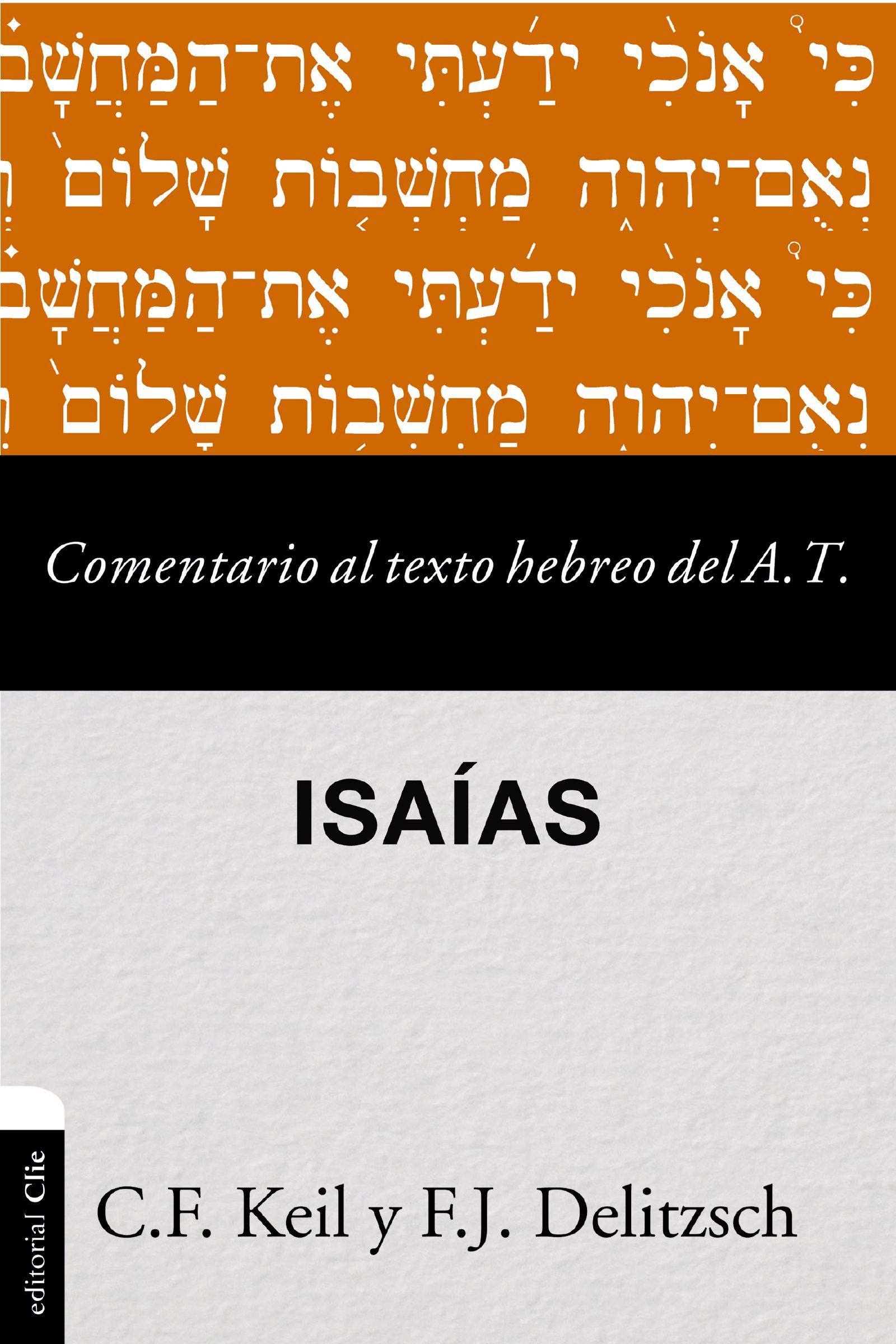
Commentary on the Hebrew Text of the Old Testament – Isaiah
Carl Friedrich Keil, Franz Julius Delitzsch
Available: September 24, 2019
Price (USA): $39.99
- Argentina (opens in a new window)
- Bolivia (opens in a new window)
- Canada (opens in a new window)
- Chile (opens in a new window)
- Colombia (opens in a new window)
- Costa Rica (opens in a new window)
- Ecuador (opens in a new window)
- EL Salvador (opens in a new window)
- Espana (opens in a new window)
- Guatemala (opens in a new window)
- México (opens in a new window)
- Nicaragua (opens in a new window)
- Panamá (opens in a new window)
- Paraguay (opens in a new window)
- Perú (opens in a new window)
- Puerto Rico (opens in a new window)
- República Dominicana (opens in a new window)
- Uruguay (opens in a new window)
- USA (opens in a new window)
- Venezuela (opens in a new window)
Acerca del libro
Isaías, Comentario al texto Hebreo del Antiguo Testamento por C.F. Keil y F.J. Delitzsch. Esta obra fue escrita y reelaborada por F. Delitzsch a lo largo de más de veinte años, en diálogo con los mejores especialistas de su tiempo. Constituye quizá la aportación más significativa de Delitzsch, que ha sido y sigue siendo considerado como uno de los libros más importantes de la investigación Bíblica y de teología del siglo XIX. Esta traducción de tipo sintético toma como base la cuarta y última edición de esta obra (1889), defendiendo la unidad del autor (un solo Isaías) y de su obra (un solo libro unitario). Este libro es adecuado tanto para el lector experto como para el lector, que tenga un conocimiento básico o nulo en hebreo y desee profundizar su conocimiento de las escrituras. Incluye:
- Amplia introducción al texto (X. Pikaza) para mayor entendimiento del texto.
- Salmos, Proverbios, Eclesiastés, Cantar de los cantares e Isaías.
- Comentario histórico-teológico de Keil.
- Textos recomendados para profundizar en el tema.
- Versículos resaltados.
- Texto original Hebreo en la cabecera de los versículos.
- Fidelidad a la veritas Hebraica.
- Agudeza filosófica, claridad y coherencia.
- Traducción al español (X. Pikaza).
Commentary on the Hebrew Text of the Old Testament – Isaiah
Commentary on the Hebrew Text of the Old Testament- Isaiah by C.F. Keil and F.J. Delitzsch. This work was written and reworked by F. Delitzsch over a period of twenty years, in dialogue with the best specialists of his time. It is perhaps the most significant contribution of Delitzsch, which has been and continues to be considered one of the most important books of Biblical research and theology of the 19th century. This synthetic translation is based on the fourth and last edition of this work (1889), defending the unity of the author (a single Isaiah) and his work (a single unitary book). This book is suitable for both the expert reader and the reader, who has little or no knowledge of Hebrew and wants to deepen their knowledge of scriptures. It includes:
- Extensive introduction to the text (X. Pikaza) for a better understanding of the text.
- Psalms, Proverbs, Ecclesiastes, Song of Songs, and Isaiah.
- Keil’s historical-theological commentary.
- Recommended texts to deepen the subject.
- Highlighted verses.
- Original Hebrew text at the head of the verses.
- Fidelity to the Hebraica veritas.
- Philosophical acuity, clarity, and coherence.
- Spanish translation (X. Pikaza).
Isaías, Comentario al texto Hebreo del Antiguo Testamento por C.F. Keil y F.J. Delitzsch. Esta obra fue escrita y reelaborada por F. Delitzsch a lo largo de más de veinte años, en diálogo con los mejores especialistas de su tiempo. Constituye quizá la aportación más significativa de Delitzsch, que ha sido y sigue siendo considerado como uno de los libros más importantes de la investigación Bíblica y de teología del siglo XIX. Esta traducción de tipo sintético toma como base la cuarta y última edición de esta obra (1889), defendiendo la unidad del autor (un solo Isaías) y de su obra (un solo libro unitario). Este libro es adecuado tanto para el lector experto como para el lector, que tenga un conocimiento básico o nulo en hebreo y desee profundizar su conocimiento de las escrituras. Incluye:
- Amplia introducción al texto (X. Pikaza) para mayor entendimiento del texto.
- Salmos, Proverbios, Eclesiastés, Cantar de los cantares e Isaías.
- Comentario histórico-teológico de Keil.
- Textos recomendados para profundizar en el tema.
- Versículos resaltados.
- Texto original Hebreo en la cabecera de los versículos.
- Fidelidad a la veritas Hebraica.
- Agudeza filosófica, claridad y coherencia.
- Traducción al español (X. Pikaza).
Commentary on the Hebrew Text of the Old Testament – Isaiah
Commentary on the Hebrew Text of the Old Testament- Isaiah by C.F. Keil and F.J. Delitzsch. This work was written and reworked by F. Delitzsch over a period of twenty years, in dialogue with the best specialists of his time. It is perhaps the most significant contribution of Delitzsch, which has been and continues to be considered one of the most important books of Biblical research and theology of the 19th century. This synthetic translation is based on the fourth and last edition of this work (1889), defending the unity of the author (a single Isaiah) and his work (a single unitary book). This book is suitable for both the expert reader and the reader, who has little or no knowledge of Hebrew and wants to deepen their knowledge of scriptures. It includes:
- Extensive introduction to the text (X. Pikaza) for a better understanding of the text.
- Psalms, Proverbs, Ecclesiastes, Song of Songs, and Isaiah.
- Keil’s historical-theological commentary.
- Recommended texts to deepen the subject.
- Highlighted verses.
- Original Hebrew text at the head of the verses.
- Fidelity to the Hebraica veritas.
- Philosophical acuity, clarity, and coherence.
- Spanish translation (X. Pikaza).